As fivelas do padre José Maurício: contextualização, datação e considerações sobre seu uso e origem
O artigo discute as características de um par de fivelas douradas pertencentes ao Museu IHGB, e que teria pertencido ao padre José Mauricio Nunes Garcia (1767-1830), para identificar suas funcionalidades e sua provável época de confecção e uso. As peças fazem parte de um conjunto doado em 1997, incluindo duas pinturas do padre, uma comenda da Ordem de Nosso Senhor Jesus Cristo e um toucador. Para isso, foram utilizadas tanto fontes primárias, quanto iconografia e elementos materiais dos séculos XVIII e XIX. Através do cotejamento das fontes, conclui-se que o par de fivelas não era destinado a sapatos, mas sim, provavelmente, às chamadas culottes, item típico da elite inglesa e francesa do século XVIII e fortemente associado ao Antigo Regime. Por mais que a peça não se encaixe no vestuário esperado para um padre carioca na virada do século XVIII para o XIX, nem sempre a indumentária era totalmente sóbria e incluía condecorações, como da Ordem de Cristo. Por mais que não seja possível confirmar que as fivelas pertenceram ao padre, a história dos objetos se cruza com a de José Mauricio, ilustrando um período de forte transição cultural, acompanhando a transição do Antigo Regime para a modernidade, com o fim da Regência inglesa, da Restauração francesa e do 1o Império brasileiro.
This article discusses the characteristics of a pair of gold buckles belonging to the IHGB Museum, which are believed to have belonged to Father José Mauricio Nunes Garcia (1767-1830), in order to identify their functions and their probable period of manufacture and use. The pieces are part of a set donated in 1997, including two paintings of the priest, a commendation from the Order of Our Lord Jesus Christ, and a dressing table. For this purpose, both primary sources and iconography and material elements from the 18th and 19th centuries were used. Through the comparison of sources, it is concluded that the pair of buckles was not intended for shoes, but rather, probably, for culottes, a typical item of the English and French elite of the 18th century and strongly associated with the Ancien Régime. Although the piece does not fit the expected attire for a priest from Rio de Janeiro at the turn of the 18th to the 19th century, the clothing was not always entirely sober and included decorations, such as those of the Order of Christ. Although it is not possible to confirm that the buckles belonged to the priest, the history of the objects intersects with that of José Mauricio, illustrating a period of strong cultural transition, accompanying the transition from the Old Regime to modernity, with the end of the English Regency, the French Restoration, and the First Brazilian Empire.
This text is in Brazilian Portuguese.
How to quote: SOARES, Cecília. As fivelas do padre José Mauricio: contextualização, datação e considerações sobre seu uso. Revista do Instituto Histórico e Geográfico Brasileiro, Rio de Janeiro, v.187, n. 500, p. 428-471, 2026. https://doi.org/10.23927/revihgb.v.187.n.500.2026.281
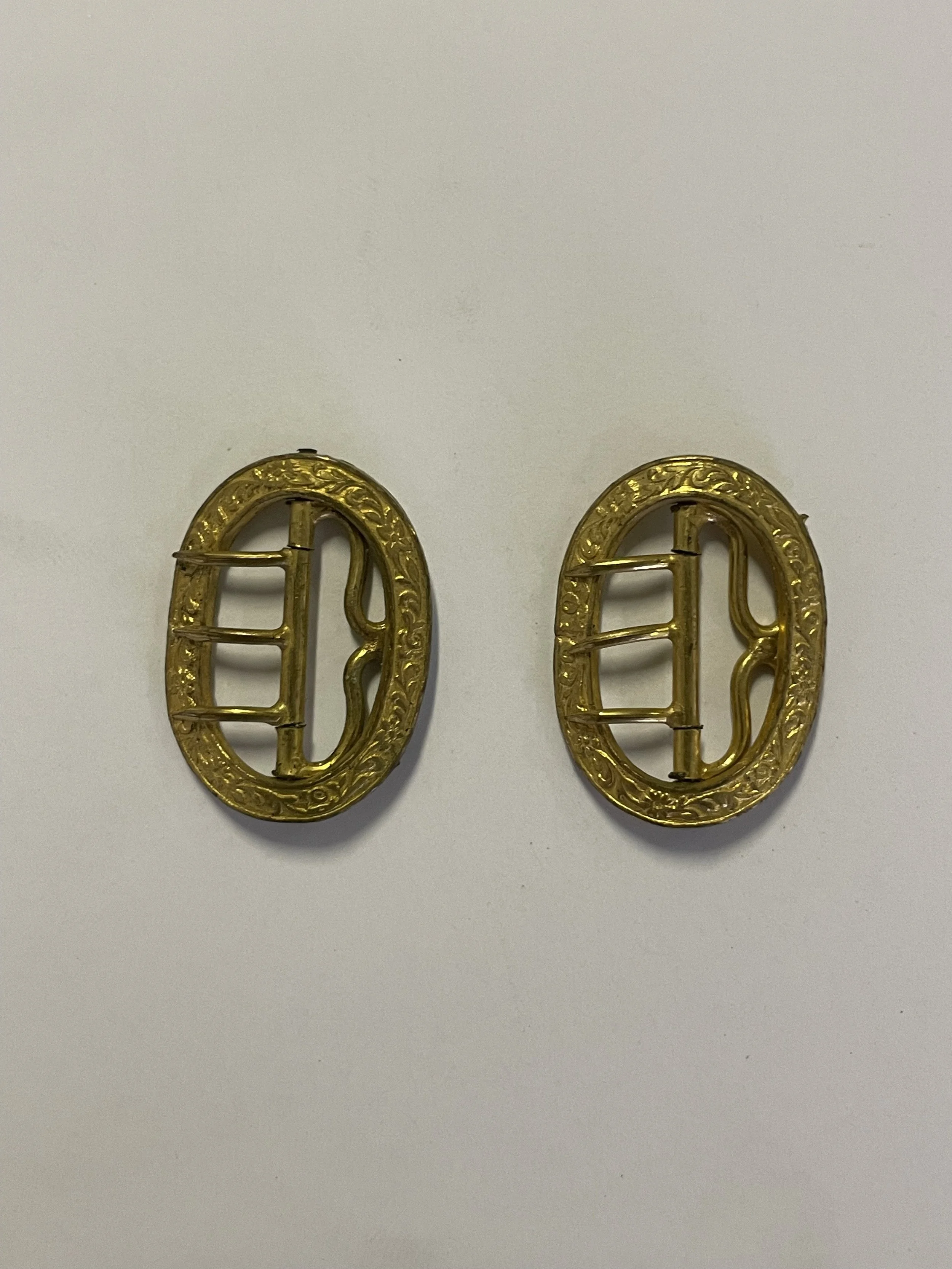
Buckles in golden metal. Museu IHGB, accession number 2014. Source.